7 Common Watering Mistakes That Are Killing Your Plants
A plant that droops by Tuesday is usually blamed on neglect. More often it is the opposite: too much attention, delivered at the wrong moment. Watering is the job you do more than any other, and the damage rarely shows up straight away. Roots can suffocate or dry out for a week or two while the leaves still look passable, and by the time they yellow, the real cause is buried out of sight.
The encouraging part is that nearly every watering problem traces back to one of seven habits. Change the habit and most plants recover without much fuss.
1. Watering by the calendar instead of the soil
“Every second day” is not a watering schedule. It is a guess. A calendar cannot know that it rained overnight, that the heating came on, that the plant pushed out a flush of new growth, or that a smaller pot dried out twice as fast as the one beside it.
Check the soil first, every time. Push a finger in up to the second knuckle. If it feels cool and damp, walk away. If it feels dry, water. For larger pots, lift one edge: a freshly watered container is noticeably heavier than a dry one, and after a few weeks your arm becomes more reliable than any reminder app.
2. Giving sips when the plant needs a soak
A quick splash wets the top inch and nothing else. Roots grow where the moisture is, so light watering trains plants to keep their roots shallow and vulnerable. Then a hot afternoon arrives and the shallow layer dries out within hours.
Water slowly and thoroughly. For containers, keep going until water runs freely from the drainage holes, then stop. For garden beds, water the root zone in two or three passes, pausing to let each one soak in, rather than flooding once and watching it run off the surface. Deep watering less often builds roots that can handle a dry spell.
3. Assuming a droopy plant is thirsty
Wilting is a symptom, not a diagnosis. A plant sitting in soggy soil will wilt because its roots are drowning: without air, they stop functioning and cannot move water to the leaves. The leaves droop, the plant looks desperate, and the instinct is to reach for the can again, which is the one thing that makes it worse.
Before you water a wilted plant, feel the soil. Dry and crumbly means thirsty. Damp, sour-smelling, or green on the surface means the problem is drainage, not drought. Yellowing lower leaves, soft brown stems and a heavy pot are further signs of a waterlogged root zone.
4. Leaving pots to sit in a full saucer
Ten minutes after watering, the saucer under a pot should be empty. Water sitting there keeps the bottom of the root ball permanently wet, which is exactly where rot begins. Tip the excess away, or raise the pot on small feet so air can move underneath.
This matters most for indoor plants in sealed rooms and for anything standing on a hard surface outdoors. A pot without drainage holes is even worse; if you love the look of a cachepot, keep the plant in a plain nursery pot inside it and lift it out to water.
5. Pouring water over the leaves
Water aimed at the foliage mostly evaporates, and what stays behind invites fungal problems, especially late in the day when leaves remain wet through the night. It also splashes soil onto stems and can spread disease between plants.
Aim at the soil, under the leaves, near the base of the plant. Water in the morning when you can, so any splashes dry off quickly. Misting is a separate activity for humidity-loving plants and should never be treated as watering.
6. Ignoring the pot, the season and the stage of growth
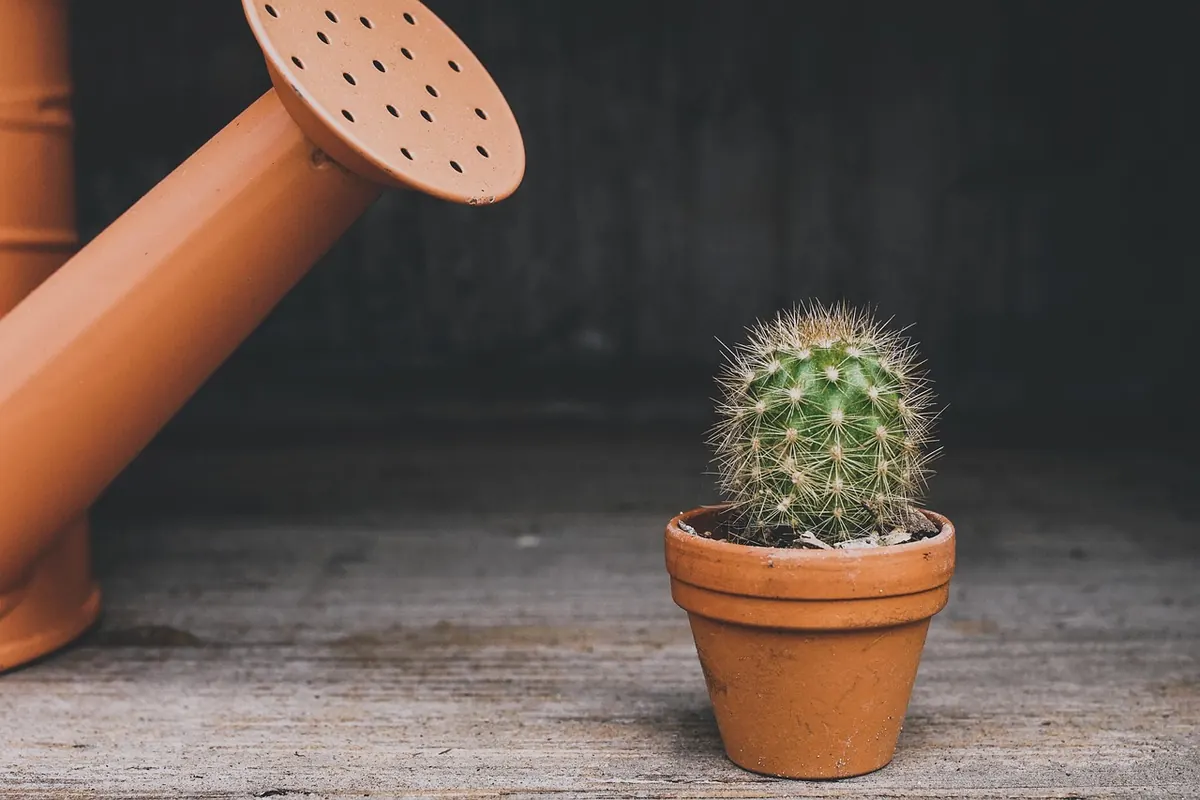
A seedling in a four-inch pot and a mature shrub in the ground have almost nothing in common. Neither do a plant in July and the same plant in January. Terracotta breathes and dries fast; glazed and plastic pots hold moisture; dark pots in full sun heat up and lose water quickly.
A few adjustments to keep in mind:
- Small pots dry out fast; check them daily in summer.
- Most houseplants need far less water in winter, when light is low and growth slows.
- Plants in flower, or pushing out new leaves, drink more than resting ones.
- Newly planted shrubs and trees need regular watering through their first two summers, even once established species around them manage alone.
- After a heavy rain, skip the can entirely.
7. Forgetting what the soil itself is doing
Soil that has gone bone dry can turn water-repellent. Peat-based potting mix shrinks away from the sides of the pot, and water races down the gap and straight out the bottom while the root ball stays dry. If that happens, set the pot in a basin of water for twenty minutes and let it drink from below, then let it drain.
In beds, sandy soil drains in minutes while clay holds water for days, so the same routine will starve one plant and drown another. Add compost to both, and keep a layer of mulch over the surface to slow evaporation and keep temperatures steadier. Compacted ground needs loosening rather than more water.
A watering routine that actually works
Forget the timetable and build a loop you repeat every few days:
- Check the soil with a finger, a chopstick or the weight of the pot.
- Water deeply only if it is dry, and water the soil rather than the leaves.
- Empty every saucer once the pot has stopped draining.
- Look at the plant the next day: perked up means you read it right, still limp means look at drainage, light and roots.
- Adjust as the seasons shift, and check more often during heatwaves.
Plants are forgiving of a missed watering and much less forgiving of a persistent habit. Learn what dry soil feels like in your own pots, and within a season you will stop guessing.
Photo: suju-foto / Pixabay