Best Plants for a Coastal Garden: Salt-Tolerant Choices for Seaside Homes
A garden by the sea is never dull. The light is brighter, the horizon changes hour by hour, and the wind keeps everything moving. It also arrives loaded with salt, bends young trees sideways and drains sandy soil so fast that water vanishes before you have coiled the hose. Coastal gardening gets far easier once you stop fighting those conditions and plant things that were built for them.
Distance matters more than most people expect. Right on the shoreline, salt and wind are relentless. A few streets inland, behind a wall or a hedge, the same plot behaves like an ordinary garden. So look honestly at your site before you buy anything.
What the Coast Does to a Garden
Four pressures shape what will grow by the sea:
- Salt spray — carried on the wind, it settles on leaves and pulls moisture out of them. You see the result as browned, scorched edges on the windward side of a plant.
- Wind — constant movement increases water loss, snaps brittle stems and scours leaves with grit.
- Free-draining soil — often sandy, gravelly or thin over rock, with little organic matter to hold water and nutrients.
- Bright, reflected light — wonderful for grey and silver foliage, punishing for shade lovers.
Plants that cope well tend to share a few traits: leathery or waxy leaves, fine or grey foliage, deep roots and a compact habit that resists being whipped about.
Shelter Is the Real Foundation
Before you plant a single flowering perennial, think about shelter. One well-placed hedge will do more for your garden than any fertiliser.
Use a permeable windbreak rather than a solid one. A hedge filters and slows the wind; a solid wall or fence forces air over the top and dumps it down behind in turbulent gusts that flatten whatever is underneath. Plant on the windward side, roughly at right angles to the prevailing wind, and let the hedge grow tall enough to lift the airflow above the crowns of your border plants.
Reliable windbreak and hedging choices
- Griselinia littoralis — glossy evergreen leaves, highly tolerant of salt, clips neatly into a formal hedge.
- Escallonia — fast-growing, with pink or white flowers, and happy on exposed sites once established.
- Tamarisk — feathery grey foliage and soft pink plumes in summer; excellent in sandy soil and full sun.
- Olearia and Brachyglottis — dense, wind-proof evergreens with daisy flowers.
- Hawthorn and holm oak — tough, long-lived choices for a larger boundary or shelter belt.
Plant hedges in autumn so roots settle before the gales arrive, water them through their first two summers, and don't trim the top until the hedge has reached the height you want.
Shrubs That Shrug Off Salt
Shrubs give a coastal garden its bones. These are the ones that keep going when the wind turns:
- Lavender — grey foliage and summer scent, happiest in poor, dry, alkaline soil. Skip rich compost and heavy mulch.
- Rosemary — as tough as it looks, and upright forms make a useful low screen.
- Cistus — papery white, pink or crimson flowers, each lasting a day. Wants sun and sharp drainage.
- Hebe — compact, neat and wind-resistant; the whipcord types are especially good in exposed spots.
- Santolina and Artemisia — silver foliage that bounces light around and takes regular clipping well.
- Hydrangea — surprisingly salt-tolerant given a little shelter; deep watering keeps the flowers coming.
Perennials and Grasses for Exposed Borders
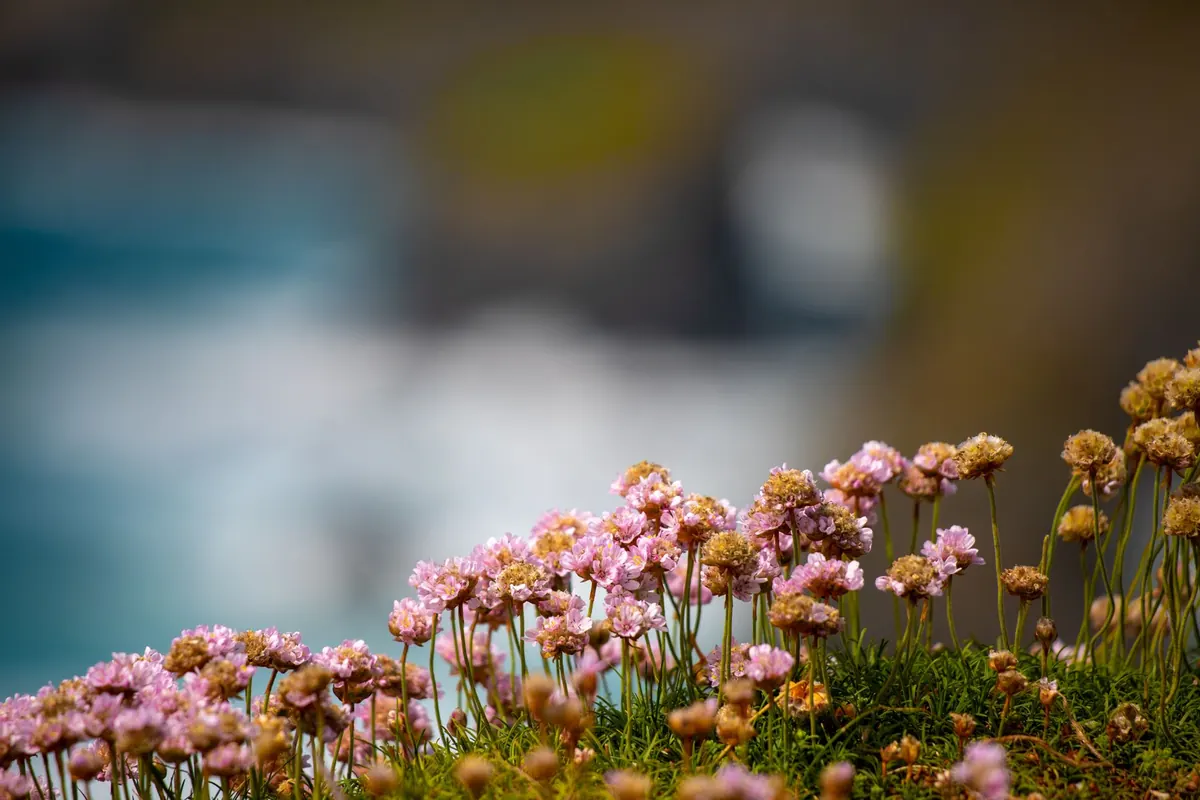
Once shelter is in place, the flowering palette opens up. Sea thrift makes tight cushions of pink pom-poms from spring into summer and looks settled in gravel or a crack between stones. Sea kale throws out big blue-grey leaves and clouds of white flowers, and its young spring shoots have long been blanched and eaten as a vegetable. Eryngium, the sea hollies, bring steely blue stems and thistle-like heads that hold their shape for months after the colour fades.
Grasses earn their place here. Blue fescue makes tidy blue-grey tussocks, Stipa tenuissima moves in the wind without breaking, and bronze carex carries warm colour through winter when little else does. Tall sedums add late flowers for pollinators and shrug off drought without complaint.
Don't overlook bulbs. Alliums rise on stiff stems that ignore wind, and crocosmia brings hot orange into late summer. Agapanthus is worth trying in the most sheltered corner, where it rewards you with rounded heads of blue or white.
Ground Covers and Coastal Edibles
Bare soil dries out and blows away, so knit the surface together with low plants. Thyme and oregano creep happily through gravel, Acaena forms a dense silver carpet, and sedum and sempervivum slot into walls and gaps between paving. All of them want sun and drainage rather than kindness.
If you want something to eat, coastal conditions suit more than you'd think. Rosemary, thyme, sage, oregano and fennel all prefer lean, dry, sunny ground — they are far happier here than in a rich vegetable bed. A raised bed filled with gritty compost gives you a reliable spot for herbs, salads and sea kale, with drainage you control.
Planting and Aftercare in a Salty, Windy Site
- Plant in autumn. Roots grow through mild, moist weather and settle before winter storms. Avoid planting in the middle of a dry summer.
- Improve only what you need to. Dig a bucket of garden compost into each square metre to help sandy soil hold water, but don't turn a free-draining plot into something rich and soft. Too much fertility produces floppy growth that shreds in wind.
- Water deeply, not often. Young plants need a long soak twice a week through their first two summers. Daily sprinkles encourage weak surface roots.
- Mulch with gravel or coarse bark. Gravel keeps leaves off damp soil, reflects light up onto silver foliage and stops the surface crusting over.
- Rinse after a storm. If you garden close to the water, hose the windward leaves after a spell of onshore gales. Washing salt off before it burns saves a lot of disfigurement.
- Prune lightly. Coastal plants recover slowly from hard cutting because they hold fewer reserves. Trim lavender, santolina and escallonia after flowering, taking only the current season's growth.
Getting Started: A Practical Order of Work
On a bare plot, work in this order: shelter first, structure second, colour last.
Begin with a hedge or a line of tough evergreens on the windward boundary and give them two or three seasons. Then add the shrubs — lavender, cistus, hebe — and let them knit together. Only once the wind has been slowed should you spend money on perennials, and even then choose grey or leathery leaves and plant them in groups rather than singly, so they shelter one another.
Finally, watch your neighbours. A plant thriving two streets away, in the same soil and the same exposure, will almost certainly thrive for you. That local evidence beats any label on a pot.
Photo: David Roberts / Pexels